
Domestic-made wafer cleaning equipment in China has crossed the 50% localization threshold, according to recent industry surveys, with Chinese wet-process tools winning an increasing share of tenders as domestic fabs push forward with capacity expansion. Behind this shift is the broader maturation of single-wafer cleaning machines and wafer spin-dryers, which have moved from being merely 'usable' on the production floor to being genuinely 'reliable'. These wet-process tools have become a critical enabling link for the latest wave of fab ramp-up, and equipment vendors that can supply stable, mass-producible cleaning and drying solutions are well positioned to capture a larger slice of a rapidly growing domestic market. The significance of crossing 50% is that it marks a psychological and operational turning point: domestic equipment is no longer treated as a risk to be hedged, but as the default planning assumption for new lines.
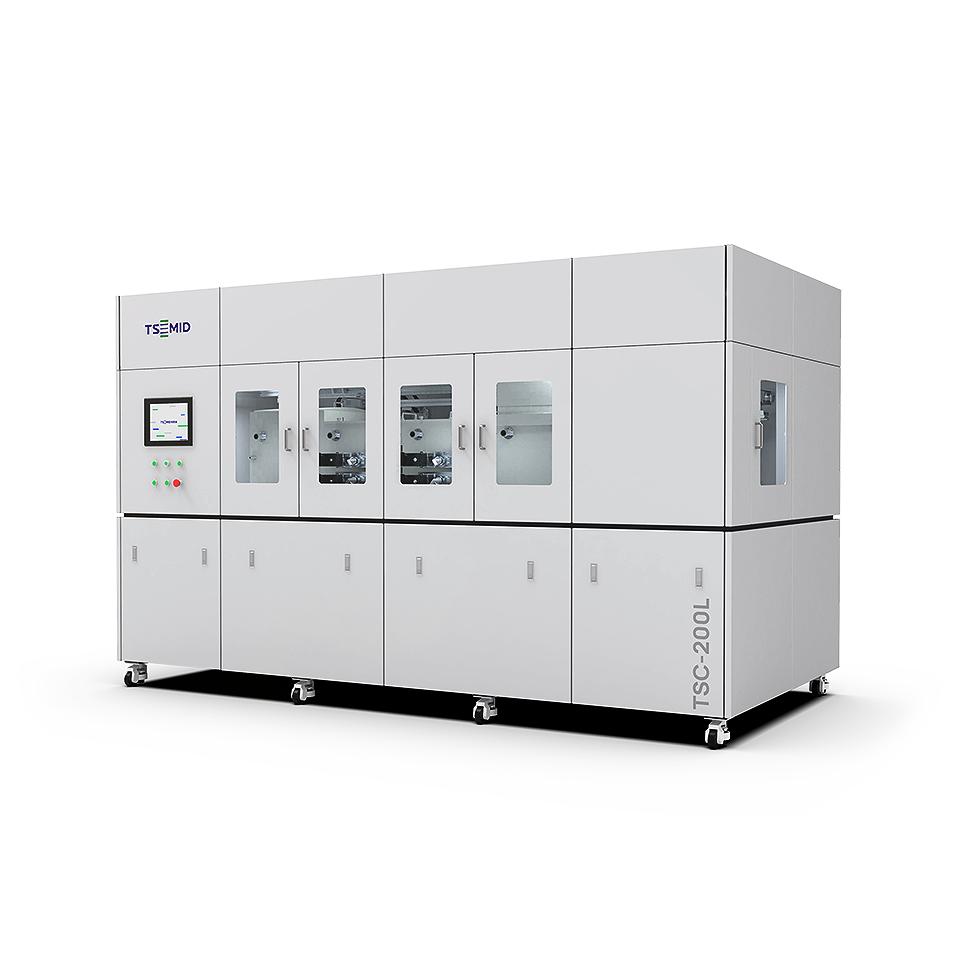
What the 50% threshold really means
Wafer cleaning runs through virtually every front-end and back-end step of semiconductor manufacturing: lithography, etching, thin-film deposition, ion implantation and chemical mechanical polishing are all followed by cleaning. A single wafer can go through more than a hundred cleaning cycles during its lifetime, which makes cleaning the most frequently repeated process in the fab and one of the most equipment-intensive. For many years this segment was dominated by overseas suppliers, but as domestic equipment makers broke through on technology routes such as space-accelerated megasonic, TEBO damage control, chemical spraying and single-wafer spin processing, Chinese tools reached a high level of substitution at 28 nm and above, and are now pushing into 14 nm and more advanced nodes. Crossing 50% means domestic cleaning equipment has shifted from a 'supplementary supply' role to a 'mainstream supply' role; customers now routinely include domestic models as standard options rather than backup choices in their fab planning. This change in buyer behavior is arguably more important than the market-share number itself, because it removes the sales friction that once kept Chinese vendors out of new-line budgets.
Why single-wafer cleaning and spin-dryers lead expansion
In newly built lines, single-wafer cleaners are the default choice because they offer high cleanliness and minimal cross-contamination between wafers. Closely coupled to them, the wafer spin-dryer removes the ultra-pure water film from the wafer surface immediately after cleaning, preventing watermarks and the re-deposition of particles. A cleaning line is typically paired with a dedicated drying station, or with integrated tools that combine cleaning, rinsing and spin-drying in one chamber. This segment is expanding in lockstep with fab capacity, making it one of the most predictable growth areas for domestic equipment makers. As wafer sizes move toward 300 mm (12 inch), the difficulty of post-clean drying rises sharply; the spin dryer's RPM control, hot-nitrogen sweep and anti-static design directly determine final yield, raising both the technical content and unit value of these tools. In practical terms, a fab that cannot dry wafers cleanly after cleaning will see its upstream cleaning steps undermined, which is why drying equipment is now sold alongside cleaners rather than treated as an afterthought.
Cost, service and the domestic substitution advantage
Compared with imported tools, domestic single-wafer cleaners and spin-dryers offer clear advantages in lead time, local service, customized modification and total cost of ownership. They can respond quickly when fabs switch between 150 mm, 200 mm and 300 mm wafer specifications. In compound semiconductor, power device and advanced packaging lines, the adaptability of domestic equipment is especially well received. In addition, the local supply of spare parts and the ability to redevelop process recipes on site significantly shorten ramp-up time and reduce the risk of unplanned downtime. For a fab under time-to-market pressure, a vendor that can commission a machine in weeks rather than months is often more valuable than a marginal specification advantage on paper. Domestic makers also tend to be more willing to co-develop custom chambers for niche materials such as indium phosphide or silicon carbide, where the global installed base of specialized tools is comparatively small.
The procurement logic behind the expansion wave
Recent fab tenders show that domestic winning rates for cleaning and spin-dry equipment are clearly rising. At 200 mm and below, domestic machines already carry the main cleaning load; at 300 mm advanced lines, Chinese vendors first enter through 'secondary key' steps such as post-CMP cleaning, backside cleaning and spin-drying, accumulate mass-production data, and then move into core cleaning steps. This 'easy-to-hard, auxiliary-to-core' path lowers customer qualification risk while giving domestic makers valuable process iteration time. It is reasonable to expect cleaning and drying to be among the first wet segments to achieve whole-line domestic supply, which would be a milestone for the broader localization of semiconductor equipment. Investors and procurement managers alike are watching this segment closely because its substitution curve is both steep and backed by real capacity demand rather than policy subsidy alone.
Based in Fuxing District, Handan, Hebei Province, Hebei Zhongke Microelectronics Co., Ltd. focuses on the domestic substitution of wafer cleaning machines, spin dryers and inspection equipment. Its fully automatic single-wafer cleaning machine and 300 mm wafer spin dryer (model SG-8-12-2D, integrating high-speed centrifugal spin-drying with double-sided hot-nitrogen drying) are already running stably on multiple production lines, and the company can flexibly configure cleaning, rinsing and drying processes to meet customer requirements. The product portfolio also includes an InP cleaning machine (SQX-150-5Y1D), a two-fluid wafer cleaning machine, a manual single-wafer cleaning dryer (QXG-300-2YDN) and wafer spin dryers for 6 and 8 inch wafers.
This localization drive is also reshaping the supply chain. Fabs that once bought every wet tool from foreign suppliers now run formal qualification programs for domestic alternatives, driven by tighter cost control, shorter lead times and the desire to reduce geopolitical supply risk. Domestic vendors have responded by improving chamber sealing, chemical delivery precision and software recipe control, closing the performance gap on mature and many advanced process steps. The result is a more balanced, multi-sourcing cleaning market rather than a single foreign vendor monopoly.
As fab expansion continues, the domestic supply of single-wafer cleaning and spin-dry equipment will remain a key support for capacity release. To learn more about the configuration and process adaptation of single-wafer cleaning and spin-dry tools, call the consultation hotline: 17177768881.