
In the localization of China's semiconductor equipment, the domestic substitution rate for etch and thin-film deposition has surpassed forty percent, making it a representative area of progress for core process equipment. Behind the achievement lies years of technical accumulation and line validation by domestic champions. At the same time, it is important to recognize that the most advanced nodes and the most complex processes still show a catch-up gap with the international frontier. A landscape of leading champions and a pursuing tier will persist for some time.
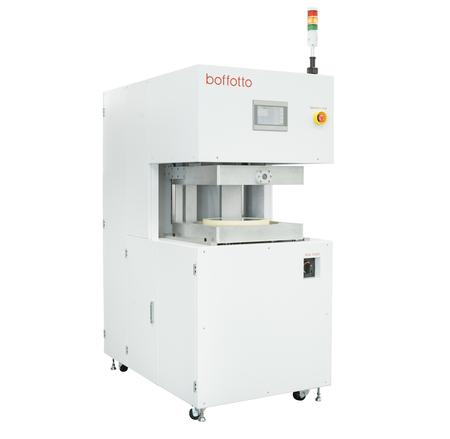
Etch and Deposition Lead the Localization Push
Etch and thin-film deposition are the two categories of core process equipment with the largest number of tools on a fab line, and they are also where domestic equipment first achieved scale breakthroughs. Thanks to stable performance at mature nodes and continuous process iteration, the share of domestic etch and deposition tools in Chinese fabs has risen steadily. With the localization rate topping forty percent, the autonomous build-out of core equipment has reached a notable milestone, and domestic tools have moved from trial use to mainstream configuration on the line.
Leaders Push Ahead, but the Pursuing Tier Still Needs Time
Domestic core equipment now shows a pattern of champions leading and a pursuing tier following. The head players can already compete with international vendors in certain categories, but many smaller categories and advanced-node processes still require sustained R&D investment and line validation. Localization is a gradual process; one should neither overestimate short-term results nor deny the long-term trend because of the gap. A clear-eyed view of where the industry stands is the basis for a pragmatic substitution path.
Core Breakthrough Followed by Supporting Localization
After core equipment broke through first, the localization of supporting steps such as cleaning, spin-drying and inspection is following closely. The playbook proven by core equipment vendors is being borrowed by supporting tool makers, and the validation and introduction pace of domestic supporting tools on fabs is clearly accelerating. Hebei Zhongke Microelectronics Co., Ltd., based in Fuxing District, Handan City, Hebei Province, focuses on supporting products such as wafer cleaning machines, single-wafer cleaning & spin dryers, wafer unloading tables and wafer inspection lamps, and keeps raising its application share and customer reputation on the back of the core-equipment breakthrough.
Behind the Forty Percent Milestone
The news that domestic substitution in etch and thin-film deposition has crossed forty percent is a significant marker, but the number deserves careful interpretation. It reflects the share of domestic tools in new purchases and installed capacity at Chinese fabs, and it has been achieved through a long process of technology accumulation and line validation. Etching and deposition are natural candidates for early domestic success because they are process-intensive rather than purely physics-limited; they can be improved incrementally through engineering iterations and close collaboration with fabs. Chinese suppliers have leveraged the enormous domestic fab base to refine these tools quickly, turning years of line experience into measurable performance gains.
Yet the gap at the frontier remains real. The forty percent figure is heavily weighted toward mature nodes and established processes, where the technical requirements are well understood and the room for domestic competition is large. At the most advanced nodes, the demands on precision, uniformity and repeatability are extreme, and the incumbents have decades of accumulated know-how. Domestic suppliers are working toward this frontier, but closing the gap requires not just engineering skill but long cycles of qualification at the few fabs that run the leading edge. The honest reading is that the industry has won the mature-node battle and is now investing in the longer campaign at the frontier, rather than claiming an across-the-board victory.
This pattern has direct consequences for supporting segments like cleaning and inspection. The etch and deposition story provides a proven playbook: start on mature nodes, build credibility through volume production, iterate with customer feedback, and gradually climb the complexity curve. Domestic supporting equipment makers can follow the same route, and they benefit from the infrastructure and trust that the core equipment champions have already built. As the localization rate in core tools keeps climbing, the adjacent supporting segments are pulled along in its wake, because fabs increasingly prefer to build lines around a coherent domestic supply ecosystem rather than mixing and matching from scattered sources. The forty percent milestone is therefore not an endpoint but an accelerant for the whole domestic equipment chain.
The Road From Forty Percent to Higher
Reaching a forty percent localization rate in etch and deposition is a milestone, but the path to higher rates requires deliberate effort on several fronts. The most advanced nodes demand continuous research investment and extended line qualification, where domestic suppliers must close the gap in precision and repeatability. Reliability metrics, such as mean time between failures, must be proven in long production runs. And service speed, traditionally a strength of local vendors, must be maintained as a competitive differentiator. Supporting segments such as cleaning and inspection can follow the same playbook that the core equipment leaders pioneered, adapting it to their own process sensitivities. As the industry works its way from forty percent toward higher penetration, the whole domestic equipment chain, core and supporting alike, is moving in the same direction.
It is also important to recognize that the forty percent milestone includes progress across a widening set of tool categories. The domestic equipment industry is no longer dependent on a single breakthrough product; it is building a portfolio of competitive tools across etch, deposition and increasingly the supporting steps. This breadth reduces the risk that any one setback derails the overall localization trend. For adjacent segments like cleaning and inspection, the existence of a broad and credible domestic core equipment base makes it easier to win fabs' confidence, because the supply ecosystem as a whole is already proven. The result is a rising tide that lifts the localization rate across more categories each year.
This steady progress across the core process tools continues to create favorable conditions for the localization of adjacent supporting equipment segments, including wafer cleaning, spin-drying and inspection.
For selection and process matching of domestic cleaning, drying and inspection supporting equipment, please call the industry hotline: 17177768881.