
As the maturity of domestic semiconductor equipment rises, a new trend of going overseas is forming. As Southeast Asian fabs expand, domestic cleaning, thermal, metrology and packaging tools are following the overseas footprint of Chinese fabs and OSATs, opening a growth window beyond domestic substitution and building an international reputation for Chinese equipment.
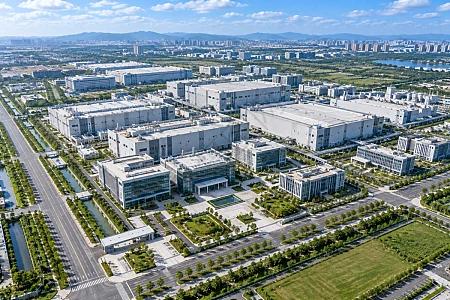
Southeast Asia becomes the new manufacturing land
In recent years, Southeast Asia has attracted packaging/testing and specialty wafer capacity thanks to cost, policy and location. Fabs and OSATs in Vietnam, Malaysia and Singapore keep expanding, generating strong demand for cost-competitive, short-lead-time semiconductor equipment. This offers a rare overseas opportunity for Chinese tools already proven at home, and introduces a new competitive variable in a market long dominated by European, American and Japanese equipment.
Domestic equipment follows customers abroad
Rather than competing purely on price early on, Chinese equipment mostly goes overseas by following Chinese fabs and OSATs building new lines abroad. When customers build plants overseas, they prefer domestic equipment already running smoothly at home that can offer fast local support, to cut commissioning risk and maintenance cost. This "bundled going-global" model significantly lowers the barrier to entering overseas markets and lets overseas customers build trust through real use.
The overseas model is evolving in stages: first "hitching a ride" on Chinese fabs' new overseas lines to reduce customer concerns, then bidding directly on local Southeast Asian packaging capacity with cost performance and quick response, and eventually building local service teams and spare-parts warehouses to shift from selling products to delivering service. Cleaning, spin-drying and inspection tools lead because their barriers are moderate and validation cycles are shorter.
Cleaning and inspection lead the overseas push
Among the overseas pack, technically mature and service-friendly cleaning, spin-drying and inspection tools go first. As a domestic equipment firm, Hebei Zhongke Microelectronics Co., Ltd. has supplied fully automatic single-wafer cleaning machines, wafer spin dryers, EFEM cleaning & drying systems, wafer unloading tables and wafer inspection lamps QG-150 and QG-250 alongside overseas wafer and packaging line projects, providing cost-effective cleaning-inspection solutions for Southeast Asian and other new fabs.
The logic behind going overseas
The push by Chinese equipment makers into overseas markets is a natural consequence of domestic maturation. When a tool has been validated on many domestic production lines, it accumulates the reference cases and reliability data that international customers demand. Rather than a desperate search for sales, the overseas move is an extension of a product that already works. The first overseas customers are often the Chinese fabs and OSATs themselves, who are building plants in Southeast Asia to diversify their manufacturing footprint and naturally prefer equipment they already trust.
This "bundled" entry lowers the risk for everyone involved. The overseas fab already knows how to operate the domestic tool, the supplier already knows how to service it, and there is no language or qualification gap. Once the tool is running well in that overseas plant, it becomes a visible reference for neighboring local customers who might otherwise be cautious about Chinese equipment. The first international win therefore seeds further wins in the region.
Why cleaning and inspection lead the way
Not every type of equipment is equally suited to early overseas expansion. Complex front-end tools with demanding installation and service requirements are harder to export. Cleaning, spin-drying and inspection tools, by contrast, are relatively self-contained, have well-understood operation, and address universal needs that every fab and packaging house shares. They also carry a more approachable price point, making them attractive first purchases for new Southeast Asian facilities balancing budget and capability. This is why these categories naturally lead the internationalization effort.
Building a sustainable overseas business eventually requires local presence. Suppliers that once shipped machines from China now need service engineers and spare-parts warehousing closer to their customers, because downtime in an overseas fab is even more costly when support is half a world away. Companies investing in that local service capability are the ones turning a few export sales into a durable international business.
The transition from export sales to a sustainable overseas business also changes how domestic companies operate. They must learn to support customers across time zones, train local engineers, and maintain spare-parts inventory far from home. Suppliers that invest in this organizational capability turn a handful of opportunistic orders into a reliable revenue stream. As Chinese fabs continue to diversify manufacturing across Southeast Asia and beyond, the companies that have already built international service muscle will be best placed to ride the next wave of global demand for cost-competitive semiconductor equipment.
The overseas expansion of Chinese equipment is still in an early but accelerating phase. The most successful firms will be those that combine capable products with genuine investment in local service and long-term customer relationships. As more domestic fabs build abroad and as Southeast Asian packaging capacity continues to grow, the window for establishing a credible international presence is open now, and the companies that act on it will become part of the next generation of globally recognized semiconductor equipment suppliers.
As more Chinese manufacturers look overseas, the ability to deliver both capable equipment and dependable local support will separate leaders from followers. The current window in Southeast Asia offers a rare chance for domestic suppliers to establish an international reputation, and the firms that move decisively now will reap the rewards for years.
Cleaning and inspection tools are natural pioneers because they are self-contained, cost-effective and address universal fab needs, making them lower-risk first purchases for newly built Southeast Asian facilities balancing budget and capability.
Suppliers that combine capable machines with genuine local support are the ones most likely to convert early export wins into lasting international businesses.
In short, going overseas is no longer optional for ambitious domestic equipment makers; it is a strategic necessity that will define which suppliers become global names in the years ahead.
As Chinese fabs expand overseas, domestic semiconductor equipment will enter an acceleration phase. Cleaning, metrology and packaging tools are expected to gain a foothold internationally. For overseas equipment matching, call the consultation hotline: 17177768881.