
Competition in China's semiconductor equipment industry is increasingly a competition of industrial clusters. The Yangtze River Delta, centered on Shanghai and Jiangsu, and the Beijing-Tianjin-Hebei region, are advancing together, each forming a supporting network of whole machines, components, materials and applications. The cluster effect is markedly lowering the R&D and manufacturing cost of domestic equipment and tightening collaboration among equipment firms.
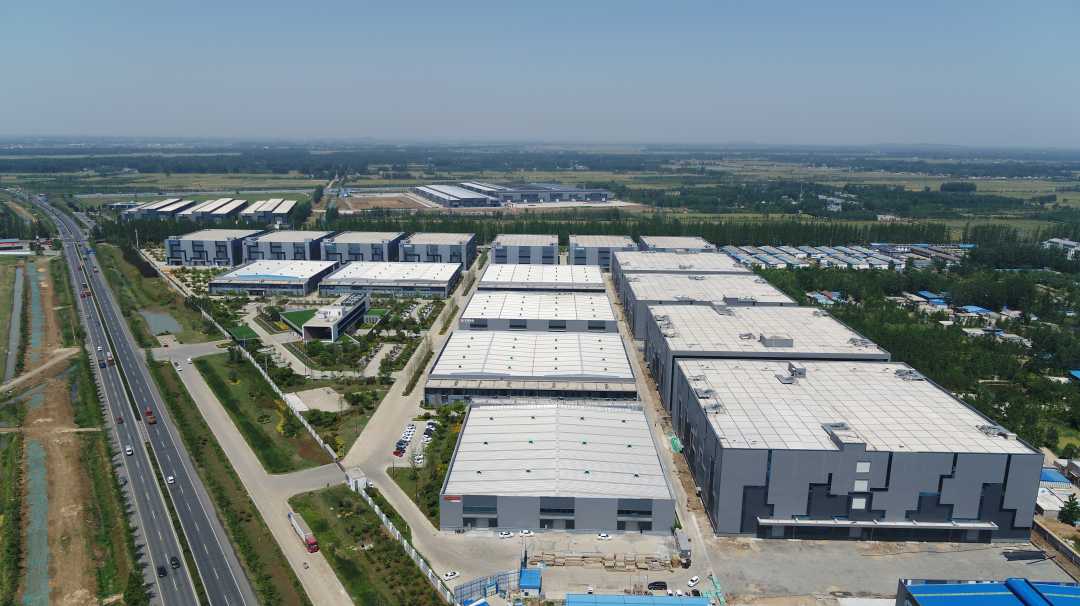
Yangtze Delta: a highland for machines and components
Leveraging a strong manufacturing base and dense wafer and packaging capacity, the Yangtze River Delta gathers leading domestic equipment makers and core component suppliers. From cleaning and thermal processing to coater-developers and metrology, it has built a relatively complete equipment ecosystem, able to respond quickly to Shanghai and southern Jiangsu fabs, and is the most important highland for domestic equipment. The mature supply chain gives clear efficiency advantages in commissioning, spares and service.
Beijing-Tianjin-Hebei: R&D and specialty equipment
Beijing-Tianjin-Hebei relies on Beijing's universities and institutes for equipment R&D and design talent, while Tianjin and Hebei apply their manufacturing, cost and location strengths to specialty process equipment and supporting tools. Recently, the region has laid out dedicated equipment around compound semiconductors and cleaning/inspection, complementing the Yangtze Delta and forming two growth poles. The channel between research transformation and industrialization is also opening up.
The deeper logic of clustering is that competitiveness increasingly depends on spatial concentration of innovation factors. When machine makers, component suppliers, material firms and fabs are densely distributed in one region, equipment commissioning, spare-parts supply and joint R&D all cost less and iterate faster. The two regions are forming a division of R&D in the north, manufacturing in the east, and mutual machine-component support, letting China avoid repeated construction and grow through specialization.
A Hebei equipment firm joins regional synergy
Hebei Zhongke Microelectronics Co., Ltd., based in Fuxing District, Handan, is one member of the Beijing-Tianjin-Hebei semiconductor equipment cluster. The company makes fully automatic single-wafer cleaning machines, InP cleaning machines, wafer spin dryers, EFEM cleaning & drying systems, VGF crystal growth furnaces and wafer unloading tables, leveraging regional R&D-manufacturing synergy to serve local wafer and packaging lines nearby and cross-regionally match Yangtze Delta customers.
Why clusters beat isolated companies
Semiconductor equipment development is not a solitary activity. A machine maker needs component suppliers close by for fast iteration, a base of nearby fabs to validate its tools, and access to skilled engineers who have experience in the industry. When all these elements are geographically concentrated, the cost and time of development fall dramatically. Engineers move between companies carrying knowledge, suppliers respond quickly to design changes, and new ideas spread through informal networks. This is why regions that form strong clusters consistently outperform dispersed setups.
The Yangtze River Delta benefits from this density more than any other region in China. Its concentration of wafer fabs, packaging houses, equipment makers and component suppliers creates a self-reinforcing ecosystem where every new entrant can find the partners it needs close at hand. This maturity makes it the default home for ambitious equipment startups and the natural testing ground for new products.
The Beijing-Tianjin-Hebei complementary model
Beijing-Tianjin-Hebei offers a different but complementary profile. Beijing's universities and research institutes produce the deep technical knowledge and engineering talent that feed equipment R&D. Tianjin's port and manufacturing base suit assembly and packaging operations. Hebei, with its land and cost advantages, is increasingly home to specialty equipment makers and device fabs that benefit from the region's research output. Rather than competing head-to-head with the Yangtze Delta on general-purpose equipment, this region is carving out strength in compound semiconductors, cleaning tools and specialty applications.
The value of this complementarity grows as the two regions learn to cooperate rather than duplicate effort. A component developed in Beijing can be manufactured in Hebei and validated at a nearby fab, while the resulting product can serve Yangtze Delta customers as well. When such cross-regional supply chains form, the whole national industry becomes more efficient, and domestic equipment gains both the cost structure and the quality to compete globally.
The deeper significance of these clusters lies in the speed of innovation they enable. When suppliers, customers and research institutions are concentrated, design iterations happen faster, problems are solved through informal exchanges, and new talent circulates freely. Over time this creates a self-reinforcing advantage that is hard for dispersed regions to replicate. The coordinated development of the Yangtze Delta and Beijing-Tianjin-Hebei clusters, each playing to its strengths, is therefore not merely a geographic observation but a strategic foundation for the long-term competitiveness of the entire domestic semiconductor equipment sector.
In the long run, the strength of China's semiconductor equipment industry will be measured less by any single flagship machine than by the depth of the clusters behind it. As the Yangtze Delta and Beijing-Tianjin-Hebei continue to specialize and cooperate, they are building an industrial base that can sustain innovation over decades rather than years. That collective capability is what will ultimately let domestic equipment compete on the world stage.
As these clusters deepen their specialization and cooperation, the national industry gains both efficiency and resilience. The combined strength of the Yangtze Delta and Beijing-Tianjin-Hebei is becoming a durable platform on which domestic semiconductor equipment can continue to climb the value chain over the coming decade.
This regional division lets the Yangtze Delta concentrate on general-purpose machines while Beijing-Tianjin-Hebei pursues specialty equipment and compound semiconductors, avoiding wasteful duplication and strengthening the overall national ecosystem.
This specialization and cooperation across regions is exactly what gives the national industry its enduring competitive edge in global semiconductor equipment.
In short, the coordinated rise of these two clusters is not just a geographic trend but a durable competitive foundation for the entire domestic semiconductor equipment industry. As this ecosystem continues to mature, the national industry gains both the efficiency and the resilience needed to compete globally, turning regional specialization into a lasting national advantage.
The coordinated progress of the two clusters is reshaping China's equipment landscape. The more mature the cluster, the stronger the cost, delivery and service of domestic equipment. For domestic equipment matching, call the consultation hotline: 17177768881.