
TSMC, the world's largest pure-play foundry, has announced that its 2-nanometer process has officially entered mass production and that the capacity ramp has begun. The milestone marks the start of a new node race in advanced manufacturing and is accelerating the pace of global fab expansion. The move is more than a technical leap for the foundry; it sets a fresh set of requirements for the entire supply chain, from equipment and materials to every supporting process step, and has become a key bellwether for the global expansion cycle.
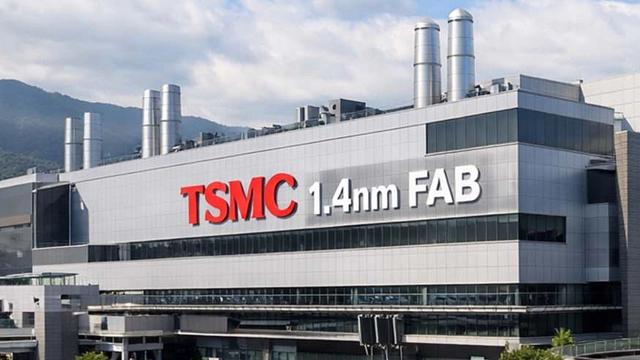
2-Nanometer Mass Production Opens a New Node Race
The 2-nanometer node introduces new transistor structures and interconnect schemes that raise process complexity and manufacturing difficulty significantly. To absorb orders from mobile processors, AI accelerators and high-performance computing chips, TSMC is simultaneously building and ramping 2-nanometer lines across its major campuses. As yield stabilizes and capacity ramps, the effective supply of advanced-node wafers will keep growing, easing the persistent shortage of leading-edge silicon. The mass production of this node also signals that competitors and equipment and materials suppliers will align around 2 nanometers for the next phase of the race.
Advanced-Node Expansion Transmits Along the Chain
Leading foundry expansion transmits equipment and supporting demand along the supply chain. Advanced nodes impose extremely stringent requirements on cleanliness, particle control and metallic contamination, making cleaning, drying and inspection pivotal. Every additional wafer of advanced-node capacity means additional demand for the corresponding supporting process tools. In effect, every node upgrade at the leading edge triggers a fresh wave of equipment and supporting process renewal.
Domestic Supporting Tools Ride the Expansion Window
The simultaneous expansion of advanced and mature nodes worldwide creates a precious validation and introduction window for domestic semiconductor equipment. While securing the autonomy of core process tools is paramount, the localization of supporting steps such as cleaning, drying and inspection is equally important. Hebei Zhongke Microelectronics Co., Ltd., based in Fuxing District, Handan City, Hebei Province, focuses on fully automatic single-wafer cleaning machines, single-wafer cleaning & spin dryers, wafer unloading tables and wafer inspection equipment. The company keeps refining performance and reliability through the domestic-substitution process, helping fabs build a safer and more controllable supporting supply chain amid the global expansion wave.
What 2-Nanometer Means for the Toolchain
The move to 2 nanometers is not an incremental tweak; it is a generational change that ripples through nearly every process step. New transistor architectures place unprecedented demands on lithography, but they also raise the bar for the steps around it. Etching must transfer increasingly complex patterns with near-vertical profiles, deposition must form ultra-thin and highly uniform films, and cleaning must remove residual particles without eroding delicate new structures. Each additional complexity in the front end creates a corresponding new requirement in the supporting steps, which is why leading-edge expansion is so equipment-intensive relative to older nodes. The capital cost per wafer of advanced capacity is many times that of mature capacity, and much of that cost lands on tools that did not even exist a generation ago.
The capacity ramp also matters as much as the technology itself. Moving a new node from risk production to stable mass production takes years, and during that window the fab is iterating on yield, tuning process recipes and bringing online additional tool sets. This ramp phase creates extended and predictable demand for equipment, because yield improvement depends on adding more tools, not just running existing ones harder. As the leading foundry ramps 2 nanometers and other players follow with their own versions, the equipment supply chain is looking at a multi-year tailwind of orders that extends well beyond the headline node itself.
Domestic suppliers should read this expansion strategically. The most advanced node will remain the domain of the few for some time, but the entire ecosystem around it is expanding, and the mature and specialty fabs that run in parallel provide a large enough market to sustain domestic supporting equipment vendors. The realistic path is to build credibility on the broad base of domestic fabs first, accumulating process data and field experience, and then gradually move up the complexity curve as customer confidence grows. Cleaning, drying and inspection are the natural entry points, because they are needed on every line and their value rises as processes become more sensitive to contamination.
The Longer Arc of Advanced Expansion
Beyond the 2-nanometer milestone itself, the longer arc of advanced-node expansion points to continued equipment demand well into the next decade. Each new node requires a fresh wave of tool qualification, additional chambers and upgraded supporting systems, which means the ramp does not end at mass production but continues as yield improves and volume grows. For the global supply chain, this creates a multi-year planning horizon that reduces cyclical risk. Domestic supporting equipment vendors should read this as an invitation to build capability for the long term: mastering mature-node processes first, then advancing toward the more sensitive requirements of leading-edge lines. The 2-nanometer ramp is the visible tip of a much larger expansion process, and every step of that process creates demand for reliable cleaning, drying and inspection equipment.
It is important to note that the 2-nanometer ramp also triggers a wave of upgrades in the surrounding equipment. As fabs move to more sensitive structures, existing cleaning and drying stations are re-evaluated and often replaced with more precise platforms, even on lines that are not brand new. This means advanced-node expansion has a halo effect on the installed base, driving refresh demand for supporting equipment across both leading-edge and adjacent lines. Domestic suppliers that can offer compatible, high-precision platforms are well positioned to capture this refresh wave alongside the new-build demand, extending their reach across the fab.
As the 2-nanometer ramp matures and attention turns to the nodes beyond, the associated equipment expansion is expected to extend well into the coming years, creating a long and stable runway for supporting equipment suppliers across the chain.
This multi-year ramp phase guarantees an extended horizon of equipment orders, giving domestic supporting suppliers a stable platform on which to build and refine their product lines.
For inquiries on introduction flow, process compatibility and lead times for wafer cleaning and drying inspection equipment, please call the industry hotline: 17177768881.