
Driven by artificial intelligence and high-bandwidth memory demand, the advanced packaging equipment market keeps expanding. HBM stacking and 2.5D/3D packaging are the fastest-growing directions, pulling up demand for bonding, dicing, cleaning, thinning and inspection equipment. Industry data shows advanced packaging's share of back-end equipment investment is rising fast, and the technical content of back-end tools is climbing with it.
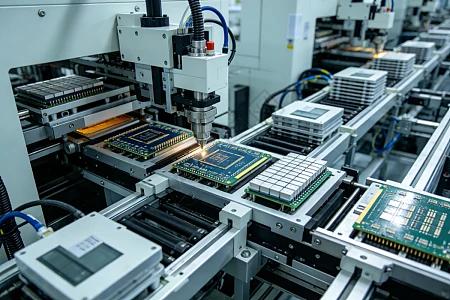
HBM drives the stacking boom
AI compute's hunger for memory bandwidth grows almost exponentially. HBM stacks multiple memory chips vertically and packages them with logic, becoming the standard for high-performance compute chips. This trend directly pulls demand for multi-layer wafer bonding, TSV, wafer thinning and temporary bonding and debonding tools. Every expansion of HBM capacity drags along a full set of advanced packaging equipment, and order visibility for related tools now extends several years out.
2.5D/3D packaging reshapes the back-end
Besides HBM, 2.5D interposer packaging and 3D stacking are spreading fast. They densely integrate multiple chiplets in one package, imposing far higher demands on precision, cleanliness and yield than traditional packaging. Back-end equipment is thus upgrading from classic wire bonding and molding to wafer-level, high-density tools, and the market structure shifts markedly. Domestic OSATs are actively expanding in this upgrade, giving domestic back-end equipment a rare validation stage.
From the demand structure, AI compute chips matching HBM is the most direct engine of this advanced packaging boom. A single high-performance chip often needs multi-layer stacked HBM to match its data throughput. Meanwhile, 2.5D and 3D packaging's cleanliness, alignment and yield requirements far exceed traditional back-end, so investment intensity and technical content rise sharply in a clear trend of back-end tools becoming front-end-like.
Wafer cleaning and unloading are indispensable
In advanced packaging, wafers need strict cleaning and surface treatment before and after bonding and thinning; any particle can hurt bonding yield. As a domestic equipment partner, Hebei Zhongke Microelectronics Co., Ltd. offers fully automatic single-wafer cleaning machines, 12-inch single-wafer cleaning & spin dryer SG-8-12-2D, EFEM cleaning & drying systems and wafer unloading tables, providing high-cleanliness wafer cleaning, spin-drying and automated loading/unloading for advanced packaging lines and supporting bonding yield stability.
Why HBM changes the equipment demand curve
High-bandwidth memory is driving a step change in packaging equipment demand because its structure is inherently complex. HBM stacks multiple layers of memory die vertically, connecting them through thousands of microscopic vias and bonding them with extremely high alignment precision. Each additional memory layer adds another cycle of thinning, alignment and bonding. As AI chips demand ever more memory bandwidth, HBM generations stack more layers, and each generation requires more equipment per wafer. This is why orders for bonding, thinning and inspection tools tied to HBM are extending years into the future.
The manufacturing tolerance for HBM is also unforgiving. A particle or a slight misalignment can compromise an entire stacked layer, making cleaning and inspection between steps as important as the bonding itself. This raises the technical bar for every supporting tool in the line, including the wafer cleaning and spin-drying equipment that prepares surfaces before bonding. Suppliers that can demonstrate high cleanliness and repeatability in these intermediate steps become essential partners rather than optional vendors.
The back-end going front-end
A notable trend is that back-end packaging equipment increasingly resembles front-end wafer processing. Wafer-level handling, high-vacuum environments, nanometer-scale alignment and strict cleanroom conditions are now standard in advanced packaging, not exceptions. This convergence means that equipment originally developed for front-end fabs can be adapted to packaging, and it raises the cost and complexity of entering this market. For domestic companies, this is both a challenge and an opportunity: the technical barrier is higher, but so is the chance to catch up, because the field is newer and less locked up by incumbents.
Domestic OSATs are actively building capacity in this area, which gives local equipment makers a nearby customer base to validate their tools. Each new line that adopts Chinese equipment creates reference cases that make the next qualification easier. Over time, this virtuous loop can turn advanced packaging into a segment where domestic equipment is internationally competitive rather than merely a domestic substitute.
The expansion of HBM and advanced packaging also raises expectations for supporting tools. Cleaning and spin-drying equipment must deliver even higher cleanliness between bonding steps, and inspection must verify multi-layer structures that were uncommon a few years ago. Suppliers that can demonstrate stable, repeatable performance in this demanding environment become strategic partners. For domestic firms, the current capacity boom is a rare window to prove their tools at global standards, and the reference cases earned now will shape their market position for years to come as the back-end equipment market keeps expanding.
As this capacity wave matures, the suppliers that deliver reliable, well-supported equipment will emerge as preferred long-term partners for the packaging houses driving the AI boom. The combination of explosive demand and a relatively level competitive field makes advanced packaging equipment one of the most attractive segments for domestic manufacturers, and the companies acting now will define its structure for the next decade.
With order visibility already extending into future years, advanced packaging equipment stands out as a high-growth segment. Domestic firms that invest now in cleaning, bonding and inspection capabilities for HBM and 3D packages are positioning themselves to benefit from a demand boom that shows little sign of slowing.
This makes supporting cleaning and spin-drying equipment as strategically important as the bonders themselves, since even a single particle can compromise an expensive multi-layer stack. Domestic suppliers that meet this bar are well positioned to share in the boom.
Given the multi-year order pipeline and strong AI-driven demand, suppliers in this space can expect a sustained upcycle, making now the right time to invest in capability and capacity.
In short, the combination of explosive AI demand and a narrower technology gap makes advanced packaging equipment one of the most promising growth segments for domestic manufacturers over the coming decade.
As HBM and 2.5D/3D capacity keeps expanding, the advanced packaging equipment market stays highly prosperous, and domestic back-end tools mature through matching. For advanced packaging equipment, call the consultation hotline: 17177768881.