
The localization competition in semiconductor equipment is moving from whole machines into core components. Among many chokepoint parts, RF power supplies and vacuum systems are regarded as key battlegrounds. As domestic etch and deposition equipment ramps up, these two component categories long dominated by overseas vendors are entering a critical window for domestic substitution, and their breakthrough decides whether Chinese equipment can extend to higher-end processes.
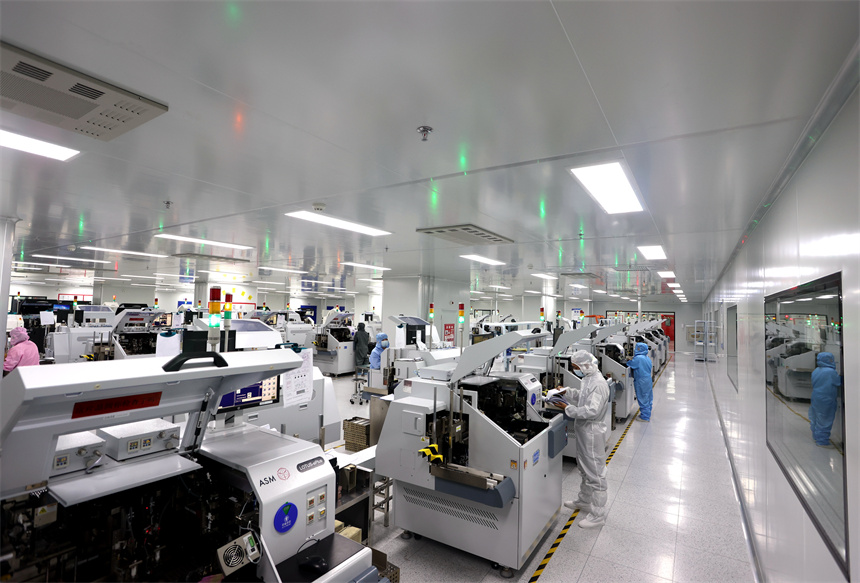
RF power: the heart of plasma processes
In etch and thin-film deposition, RF power supplies generate and stably control the plasma, and their power, frequency and matching accuracy directly decide process uniformity and repeatability. High-performance RF generators and matchers have long been supplied by a few overseas vendors and are a main bottleneck for domestic equipment performance. Chinese firms have made continuous progress in power stability, impedance matching and long-run reliability, already validated on multiple domestic lines and gradually extending from mature to finer processes.
Vacuum systems: the foundation of stable operation
Nearly all semiconductor processes run under high vacuum. Vacuum systems, including dry pumps, turbomolecular pumps and vacuum valves, maintain chamber vacuum and cleanliness; their pumping speed, ultimate vacuum and oil-free capability directly affect process yield. Domestic vacuum systems are breaking through in dry pumps, turbo pumps and related valves, reducing dependence on imports. If vacuum fluctuates, the process result of a whole wafer can be affected, which is why reliability demands are extremely high.
From operating principles, RF supplies and vacuum systems, though less eye-catching than lithography lenses, are the two pillars of stable etch and deposition. RF generators turn power into stable plasma, and vacuum provides a clean, dry environment. These parts carry high barriers and long validation cycles. By running long trials on domestic machines and accumulating real-condition data, Chinese firms are closing the gap; as domestic equipment shipments rise, component makers gain more validation opportunities in a virtuous cycle.
The component ecosystem decides machine maturity
A mature machine relies on a mature component ecosystem. As a domestic semiconductor equipment firm, Hebei Zhongke Microelectronics Co., Ltd., in its wafer cleaning machines, spin dryers and inspection equipment, also emphasizes autonomous and domestic sourcing of key components, and leverages the Beijing-Tianjin-Hebei equipment cluster to promote RF, vacuum and temperature-related parts on domestic machines, jointly strengthening the supply-chain foundation.
RF power supplies explained
In etch and deposition chambers, plasma is created by applying radio-frequency energy to a gas, and the quality of that plasma depends almost entirely on the RF generator and its matching network. The generator must deliver stable power at the correct frequency, while the matching network continuously adjusts to keep the load optimized as chamber conditions change. If power fluctuates, the etch rate or deposition uniformity shifts, and wafers begin to deviate from specification. Because these devices sit at the heart of the process, even small improvements in their stability translate directly into yield gains.
High-performance RF generators combine power electronics, precision control and software in a way that takes years to mature. Overseas leaders accumulated decades of field data to refine their products, which is why domestic developers cannot simply copy a schematic and achieve comparable reliability. Instead, they must generate their own field data by shipping generators onto domestic production lines and learning from real operation. The rapid expansion of Chinese fabs, with growing fleets of domestic etch and deposition tools, now provides exactly that volume of real-world experience.
Why vacuum systems are foundational
Nearly every core semiconductor process demands a vacuum environment, because residual gases and moisture would contaminate sensitive surfaces and ruin thin films. The vacuum system, including dry pumps, turbomolecular pumps and vacuum valves, must achieve and hold a clean, oil-free vacuum while cycling wafers in and out. Any leak or contamination here compromises the entire process. Vacuum hardware is therefore both a workhorse and a safety-critical component, and its reliability is taken for granted until it fails.
Domestic progress in dry and turbo pumps is meaningful because vacuum is a segment with broad applicability beyond a single process tool. A pump supplier that wins qualification on one type of chamber can extend to many others. As domestic vacuum parts prove themselves, machine makers reduce dependence on long-lead imports and gain more control over maintenance. Together with RF power, vacuum systems represent the deeper layer of the supply chain where localization now determines whether Chinese equipment can move up the performance curve.
The maturation of RF and vacuum components also reshapes the competitive landscape for whole machines. A tool equipped with reliable domestic RF generation and vacuum handling is no longer held back by foreign bottlenecks, and its performance can be tuned more freely. This freedom lets domestic machine makers differentiate on stability and customization rather than merely matching imported subsystems. As more component suppliers reach qualification, the ceiling for domestic etch and deposition equipment rises, and the path toward higher-end processes becomes both shorter and more attainable.
The breakthrough on RF and vacuum components is thus a sign of deeper things to come. As these foundational subsystems mature domestically, the machines built around them can push into more demanding processes with less reliance on imported bottlenecks. The progress reported today is the product of years of patient engineering, and it sets the stage for the next round of advancement across the broader domestic semiconductor equipment supply chain.
The continued maturation of these foundational subsystems will steadily raise what domestic etch and deposition equipment can achieve. With more field data accumulating every quarter, the gap to international leaders in RF power and vacuum handling is expected to narrow further, supporting the broader push toward self-reliant semiconductor equipment.
This progress also frees domestic machine makers to differentiate on stability and customization rather than relying on imported subsystems, gradually raising the ceiling of what Chinese-built equipment can achieve across more demanding process steps.
Every additional quarter of field data brings these components closer to parity, supporting a steady climb toward more capable domestic equipment.
RF power and vacuum localization is key to whether domestic equipment can extend to higher-end nodes. As breakthroughs continue, the autonomy of Chinese equipment will step up. For domestic equipment matching, call the consultation hotline: 17177768881.